
Table of Contents
- What Makes a Dog Toy Actually Indestructible
- Rubber vs Nylon: Which Lasts Longer for Power Chewers
- Safe Materials for Dog Chew Toys: What to Look For
- Interactive Toys for Aggressive Chewers That Hold Up
- How to Stop a Dog from Destroying Toys
- Sizing, Wear Signs, and When to Replace
- Frequently Asked Questions
Last Updated: September 27, 2026
What Makes a Dog Toy Actually Indestructible
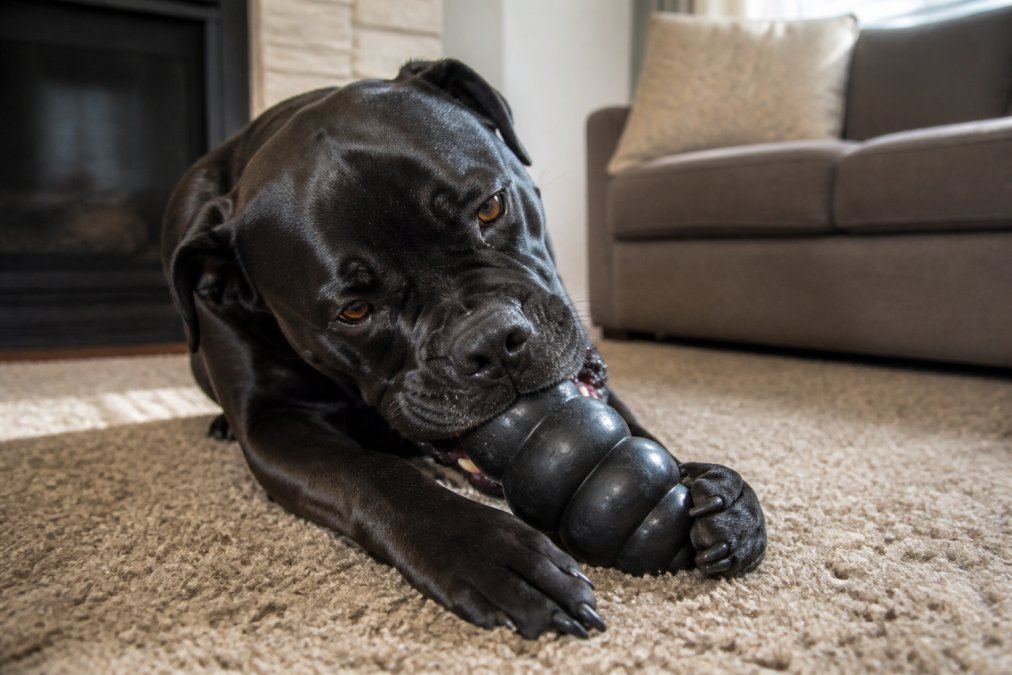
A truly indestructible dog toy resists puncturing, tearing and compression by combining dense material with enough flex to absorb jaw pressure, which is what separates durable dog toys from the rest. No toy survives every dog, but the best durable dog toys for chewers share three traits: high material density, rounded edges and no hollow seams.
Material Density and Tear Resistance
Material density is the mass of a material per unit of volume, and it decides how much force a toy absorbs before it splits. Dense rubber flexes under pressure and springs back. Cheap hollow plastic cracks.
Chew Intensity and Jaw Strength
Chew intensity describes how hard and how persistently a dog works a toy, and it should set your buying decision before breed or size does. A small terrier can out-chew a placid retriever twice its weight.
Rubber vs Nylon: Which Lasts Longer for Power Chewers
Nylon outlasts rubber for most power chewers, but rubber wins on flexibility and dental safety. The right pick depends on how your dog chews, not how big it is.
| Material | Best For | Key Strength | Watch Out For |
|---|---|---|---|
| Natural rubber | Moderate to heavy chewers | Flexes and bounces back | Shreds under relentless jaw work |
| Nylon | Aggressive chewers | Puncture-resistant, very hard | Too hard for sensitive teeth |
| TPR blends | Light chewers | Soft on gums | Wears down quickly |
Safe Materials for Dog Chew Toys: What to Look For
Safe materials for dog chew toys are non-toxic, free from BPA and phthalates, and rated for your dog's chew strength. If a toy has no material information on the packaging, leave it on the shelf.
Look for these on the label:
- Non-toxic rubber or nylon with a stated source
- BPA-free and phthalate-free construction
- A toughness rating matched to chew intensity
- No small parts that can detach and become a choking hazard
Why BPA and Phthalates Matter for Chewers
BPA (bisphenol A) and phthalates are plasticisers and stabilisers used to make some rubbers and plastics softer or more flexible. The concern for dogs is not a single chew session but cumulative exposure: a power chewer that works the same toy daily for months will abrade the surface, and small fragments can be swallowed. Over time, those compounds can accumulate in the body.
What 'Non-Toxic' Actually Means on a Label
'Non-toxic' is not a regulated claim in the way 'BPA-free' is. It is a marketing phrase. A toy can be labelled non-toxic while still containing phthalates, heavy-metal stabilisers or unlisted dyes.
What to look for instead:
- A named material (for example, 'natural rubber' or 'food-grade nylon') rather than a generic 'thermoplastic'
- A stated country of manufacture and a manufacturer contact
- A chew strength rating printed on the pack, not just in the online listing
- Third-party testing marks where the brand publishes them
Materials to Avoid for Aggressive Chewers
Some materials fail predictably under sustained jaw pressure, and the failure mode is the problem:
- Thin hollow plastic, cracks into sharp shards that can cut gums and the oesophagus
- Soft vinyl and PVC, often plasticised with phthalates and shreds into swallowable flakes
- Compressed rawhide and bone-like hard chews, can splinter or fracture teeth; veterinary dentists see slab fractures from these regularly
- Cheap rope with a hollow core, the core unravels into long strands that can cause intestinal blockage if swallowed
- Squeakers and glued-on appendages, the first thing a determined chewer removes, and the most common surgical retrieval item
Reading a Toughness Rating
Toughness ratings are not standardised across brands, so treat them as relative, not absolute. A 'level 4' from one maker may equal a 'level 2' from another. The useful signal is whether the brand publishes a rating at all, because it implies some testing has occurred. Pair that with your own one-week observation of how the toy survives your dog, and you have a better guide than any number on a pack.
Interactive Toys for Aggressive Chewers That Hold Up
Interactive toys for aggressive chewers work best when they combine a tough outer shell with a food reward inside. The chewing becomes the game, and the toy stops being a target for pure destruction.
Freeze a treat-stuffed rubber toy overnight. The cold numbs sore gums and the extra hardness stretches chewing time from minutes to a solid half hour.
How to Stop a Dog from Destroying Toys
You stop a dog from destroying toys by matching the toy to its chew habits, supervising play, and rotating the toy supply so nothing gets stale. Most destruction is a management problem, not a behavioural one.
Try this sequence:
- Separate toys into "solo" and "supervised only" piles
- Rotate three or four toys weekly to keep them novel
- Remove any toy the moment it starts to split
- Redirect chewing onto an approved toy when your dog targets furniture
Supervised Play Protocols
Supervised play means you're in the room and watching while your dog works a tough toy. It's the single best defence against a swallowed fragment.
A workable protocol looks like this:
- Set a timer. Ten to fifteen minutes for power chewers, twenty for moderate. When the timer ends, the toy goes away. This preserves novelty and prevents the jaw fatigue that leads to sloppy chewing and swallowed pieces.
- Sit at floor level. You need to see the toy, not just the dog. Watch for the moment the surface starts to pit or split, because that is when fragments begin to release.
- End on a win. Take the toy while your dog is still engaged, not after it has lost interest. The toy stays high-value and the dog does not learn to dismantle it out of boredom.
- Separate chew toys from comfort toys. A soft plush is for cuddling, not chewing. Mixing the two teaches a dog that all toys are fair game for destruction.
Why Boredom Destroys More Toys Than Jaw Strength
A dog with nothing to do will dismantle anything it can reach. Destruction is often the symptom, not the problem. The underlying drivers are usually one of four:
- Under-stimulation, insufficient physical exercise or mental work
- Teething discomfort, puppies and adolescent dogs chew to relieve gum pain
- Separation-related stress, chewing as a self-soothing behaviour when alone
- Learned reinforcement, the dog has previously been rewarded with attention for destroying something
Rotation Schedules That Actually Work
Rotation is not about hiding toys. It is about controlling novelty so the dog never gets bored enough to escalate.
A simple weekly system:
- Day 1-2: Toy A and Toy B available
- Day 3-4: Swap to Toy C and Toy D
- Day 5-6: Return Toy A and Toy C
- Day 7: Inspect every toy, discard any with cracks, splits or missing chunks
When to Seek Behavioural Help
If your dog destroys toys even with adequate exercise, enrichment and supervision, the chewing may be anxiety-driven rather than play-driven. Signs include destruction focused on doorways, windows or your belongings, and chewing that happens mainly when the dog is alone. In that case, a veterinarian or a qualified behaviourist is the right next step, not a tougher toy.
Sizing, Wear Signs, and When to Replace
The right toy size is large enough that your dog can't fit the whole thing in its mouth, but small enough to carry comfortably. When in doubt, size up for heavy chewers.
Check toys weekly for these signs:
- Deep cracks or splits along seams
- Chunks missing or edges worn smooth
- Loose parts or exposed inner material
- A change in texture from firm to spongy
Durability is a match between toy and dog, not a fixed property. The toughest toy on the shelf is useless if it's the wrong material for how your dog actually chews.
Frequently Asked Questions
What are the toughest dog toys for heavy chewers?
The toughest options use dense natural rubber or high-grade nylon. Look for toys labelled for power chewers or those with a high toughness rating. Rubber compound toys offer flexibility and resilience, while nylon provides puncture-resistant hardness. Avoid thin plastic or plush toys. Always match the toy's size to your dog's jaw strength and supervise play to ensure safety.
Are rubber or nylon toys better for aggressive chewers?
It depends on your dog's chewing style. Rubber toys are flexible and better for interactive play, bouncing, and fetching. Nylon toys are harder and suit dogs that gnaw steadily. For aggressive chewers, rubber compound toys often last longer because they flex rather than crack. Nylon can wear down teeth if your dog chews intensely for hours. Rotate between both types to keep your dog engaged and reduce wear on any single toy.
How do I choose a safe, durable toy for my dog?
Check for non-toxic, BPA-free materials. Choose a size large enough that your dog cannot swallow it. Look for toys with no small parts that could become a choking hazard. Test the toy's resilience by pressing it; it should feel solid but have some give. Supervise the first few play sessions and inspect regularly for wear and tear. Replace the toy at the first sign of cracking or punctures.
How often should I replace my dog's chew toys?
Replace chew toys as soon as you notice deep cracks, punctures, or pieces breaking off. For heavy chewers, inspect toys weekly. Even durable toys can degrade over time. Rotating toys extends their life and keeps your dog interested. If a toy becomes small enough to swallow or has sharp edges, remove it immediately. Always prioritise your dog's safety over getting extra use from a worn toy.
Finding toys that survive a determined chewer takes trial and error, but the payoff is a safer dog and fewer shredded messes. Oddities & Ends curates a practical range of pet supplies with free delivery across Australia, so you can test a few options without the hassle. Browse the pet range, take advantage of Australia-wide delivery, and shop now to find a toy that finally outlasts your dog's jaw.