
Table of Contents
- What Separates a Durable Pet Bed From a Disposable One
- Heavy Duty Dog Beds for Chewers: What Holds Up
- How to Choose the Right Dog Bed Size
- Washable Dog Bed Covers for Durability and Hygiene
- Orthopaedic Support and Joint Health for Older Dogs
- Sustainability and Eco-Friendly Materials in Pet Beds
- Conclusion
- Frequently Asked Questions
Last Updated: September 21, 2026
What Separates a Durable Pet Bed From a Disposable One
Durable pet beds are built from materials and construction methods that survive daily scratching, chewing, and washing for years rather than months. The difference almost always comes down to three things: fabric weight, stitching quality, and foam density. This guide breaks down exactly what to look for when shopping for the best durable pet beds for dogs, from ripstop covers to reinforced seams.
Materials That Actually Survive Daily Use
Canvas, ripstop nylon, and heavy-duty microfibre outlast standard polyester by a wide margin. These fabrics resist tearing when a dog paws or drags the bed across the floor. High-density foam holds its shape far longer than loose polyfill, which clumps and flattens after a few washes.
Heavy Duty Dog Beds for Chewers: What Holds Up
Heavy duty dog beds for chewers need chew-resistant fabric, reinforced stitching, and no exposed zips or loose edges a dog can grab. Ripstop fabric is the standout choice here, because its woven grid pattern stops small tears from spreading into large ones.
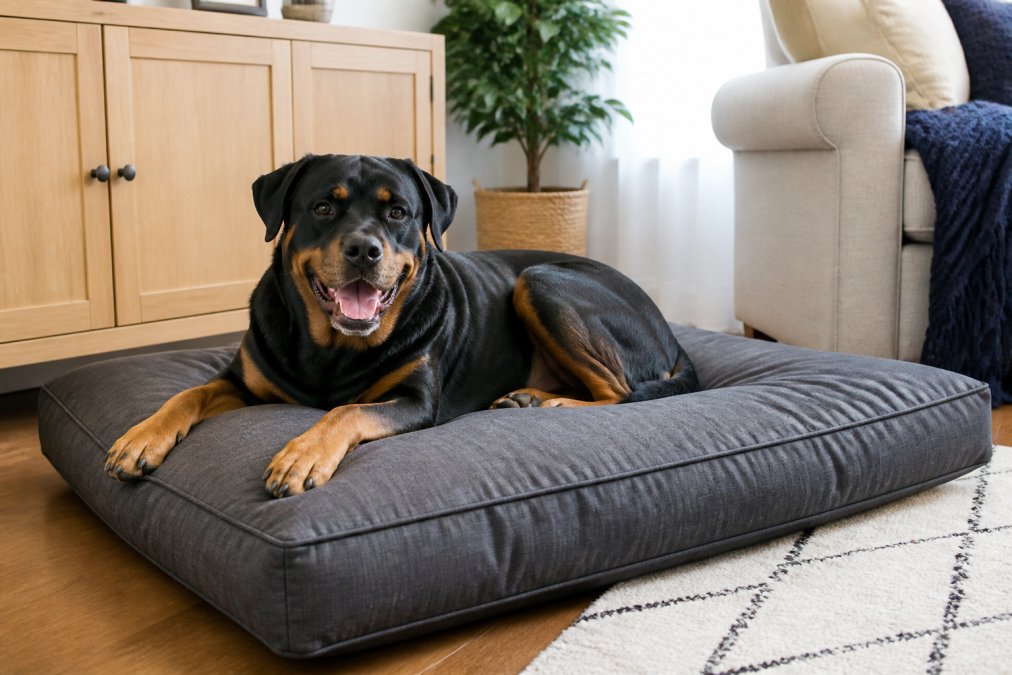
Reinforced Stitching and Ripstop Fabric
Reinforced stitching uses double or triple seams at corners and edges, the points under the most stress. Ripstop fabric adds a crosshatch weave that resists rips. Together, they form the core of any genuinely tough bed.
How to Choose the Right Dog Bed Size
Measure your dog from nose to tail while they are lying stretched out, then add 15 to 20 centimetres. That extra room lets them sprawl, nest, and turn around without hanging off the edge. A bed that is too small causes pressure points and stops a dog from settling properly.
| Dog Size | Length (nose to tail) | Bed Size to Choose | Foam Depth |
|---|---|---|---|
| Small | Up to 40 cm | 50-60 cm | 5-8 cm |
| Medium | 40-70 cm | 75-90 cm | 8-10 cm |
| Large | 70-100 cm | 100-120 cm | 10-15 cm |
| Giant | Over 100 cm | 120 cm+ | 15 cm+ |
Washable Dog Bed Covers for Durability and Hygiene
Washable dog bed covers for durability should have a removable, machine-washable outer layer and a waterproof inner liner. The cover handles dirt, hair, and odour; the liner protects the foam from accidents and moisture. Beds without a removable cover are far harder to keep clean, and trapped moisture breaks foam down quickly.
What Makes a Cover Survive Repeated Washing
Most covers fail at the same three points: the zip, the seam allowance, and the waterproof coating. Understanding each one tells you more about a bed's real lifespan than the fabric name on the label.
Fabric Choices and What They Mean in the Wash
- Canvas and heavy cotton duck, very durable, but slow to dry and prone to shrinkage if washed hot. Air-dry only.
- Ripstop nylon, light, fast-drying, resists tearing, but can feel slick and holds static. Cool wash, low tumble or air-dry.
- Heavy-duty microfibre, soft, moisture-wicking, and holds colour well. Tolerates warm washes but loses its water resistance faster than canvas.
- Bamboo and organic cotton blends, breathable and odour-resistant, but less abrasion-resistant than synthetics. Best for dogs that do not dig or chew.
A Practical Washing Routine That Extends Cover Life
- Shake and vacuum the cover before it goes in the machine. Loose hair and grit abrade fabric in the drum.
- Zip the cover closed before washing. An open zip snags other items and bends its own teeth.
- Wash on a gentle cycle at 30°C or cooler with a mild, non-biological detergent. Hot water shrinks cotton and breaks down PU laminates.
- Skip fabric softener. It coats the fibres, reduces moisture-wicking, and leaves a residue that attracts dirt.
- Air-dry flat or line-dry in shade. Direct sun degrades waterproof coatings and fades dyed fabrics. Tumble drying on any heat setting is the fastest way to destroy a cover.
- Wash the cover every 1-2 weeks for a dog that sleeps indoors, and more often during shedding season or after illness.
Hygiene Beyond the Cover
A washable cover handles the visible mess, but odour and bacteria also live in the foam and the liner. Rotate two covers if you can, one on the bed, one in the wash, so the bed is never out of action. For dogs with allergies or skin conditions, a liner that can also be wiped down with a pet-safe disinfectant adds a useful extra layer of protection between washes.
Orthopaedic Support and Joint Health for Older Dogs
Orthopaedic dog beds use high-density memory foam to spread a dog's weight evenly and ease pressure on joints. For older dogs, or breeds prone to hip and joint issues, this support matters more than plushness. A bed that bottoms out under weight offers no real benefit.
How Memory Foam Actually Supports Joints
Memory foam is viscoelastic: it responds to body heat and pressure, gradually moulding to the dog's contours rather than pushing back like a spring. That slow recovery is what distributes weight across a wider surface area and reduces the peak pressure on elbows, hips, and shoulders. Cheaper polyfill and low-density block foam do the opposite, they compress into a shallow dip under the heaviest point, concentrating pressure exactly where a dog with joint pain needs relief.
- Under 30 kg/m³, soft, cheap, compresses quickly. Fine for a light puppy, poor for an adult dog.
- 30-50 kg/m³, the practical range for most medium and large dogs. Holds shape through daily use.
- 50 kg/m³ and above, high-density, often sold as orthopaedic-grade. Best for heavy dogs, seniors, and dogs with diagnosed joint conditions.
Matching Support to Your Dog's Condition
Different joint problems need different bed profiles. A common pattern among veterinary physiotherapists is to recommend:
- Arthritis and general stiffness, a firm, high-density memory foam mattress with a low profile (under 12 cm) so the dog can step on and off without a ramp.
- Hip dysplasia, a bed with a slight bolster or raised edge, so the dog can lean against something when rising. Flat beds make getting up harder.
- Post-surgery or cruciate recovery, a fully flat, non-slip orthopaedic mattress with no bolster, so the dog is not tempted to jump or twist.
- Senior dogs with muscle wastage, a pressure-relief topper (often egg-crate or gel-infused memory foam) layered over a firm base, which reduces the risk of pressure sores on bony prominences.
Non-Slip Bases and Bed Placement
A non-slip base is not a nice-to-have on an orthopaedic bed, it is part of the support system. When a dog pushes up from a lying position, a sliding bed forces the joints to do extra work and can cause a slip-and-fall. Look for a rubberised or grip-dot underside, and place the bed on a hard floor rather than deep carpet if your dog struggles to rise.
When Orthopaedic Foam Is Not the Right Answer
High-density memory foam is not automatically better for every dog. Very young puppies, dogs that overheat easily, and dogs that prefer to nest and burrow often do better on a firmer, cooler mattress with a washable cover. Memory foam traps heat, which is a real drawback in warmer climates. For those dogs, a high-density open-cell foam with a breathable, moisture-wicking cover gives most of the joint benefit without the heat retention.
Sustainability and Eco-Friendly Materials in Pet Beds
Eco-friendly pet beds use recycled fill, organic cotton, or bamboo-based fabrics, and they are built to be repaired rather than replaced. This is the angle most retailers skip, yet it matters to buyers who want a bed that lasts without adding to landfill.
Conclusion
Choosing a durable dog bed comes down to reading the construction, not the price tag: reinforced stitching, ripstop or canvas fabric, high-density foam, and a removable washable cover. Oddities & Ends stocks a curated range of practical pet finds with delivery across Australia. Standard delivery is $11; Express is $15 where available. Browse the pet range to find a bed built to last, backed by convenient online shopping and trending deals across home, pets, and outdoor categories.
Frequently Asked Questions
Which dog bed is the most durable?
The most durable dog beds use heavy-duty materials like ripstop fabric, reinforced stitching, and high-density memory foam. Look for beds with chew-resistant covers and a non-slip base. Orthopaedic beds with removable, machine-washable covers also tend to last longer because you can clean them regularly without damaging the filling. Always check the stitching quality and fabric weight before buying.
What is the best long-lasting dog bed?
A long-lasting dog bed combines durable materials with easy maintenance. Choose beds with waterproof, tear-resistant covers and high-density foam that won't flatten quickly. Memory foam beds with removable covers are a solid choice because you can wash the cover instead of replacing the whole bed. Reinforced stitching and a non-slip base also add to longevity, especially for dogs that dig or scratch.
How do I choose the right size durable bed for my dog?
Measure your dog from nose to tail and add 15-20 centimetres for stretching room. For dogs that like to curl up, a bed slightly smaller than their full length works well. For dogs that sprawl, choose a bed that accommodates their full length. Always check the bed's dimensions, not just the recommended breed size, because dogs vary widely within breeds.
Can a dog bed be both comfortable and indestructible?
Yes, but it depends on the materials. Look for beds with a chew-resistant outer cover and a supportive memory foam or high-density foam interior. The cover should be removable and machine-washable. While no bed is truly indestructible, beds with ripstop fabric, reinforced stitching, and non-toxic materials offer the best balance of comfort and durability for heavy chewers.