
Table of Contents
- The Essential Gardening Tools for Beginners: A Complete Starter Kit
- Pruning and Cutting Tools: Secateurs, Loppers and Shears
- Watering and Irrigation Essentials for Beginners
- Ergonomic Gardening Tools for Beginners: Grip Comfort and Joint Support
- Best Gardening Tools for Small Spaces: Balconies, Courtyards and Pots
- How to Maintain Garden Tools: Sharpening, Cleaning and Rust Prevention
- Protective Gear, Safety Equipment and Tool Storage
- Conclusion: Build Your Kit One Tool at a Time
- Frequently Asked Questions
Last Updated: September 22, 2026
The Essential Gardening Tools for Beginners: A Complete Starter Kit
The right gardening tools turn a patch of dirt into something worth tending. This guide from Oddities & Ends covers the starter kit that handles roughly 90% of what a new grower actually does: planting, weeding, digging and watering. You do not need a shed full of equipment. You need six or seven decent tools and the knowledge to keep them working.
Hand Tools You Will Use Every Single Week
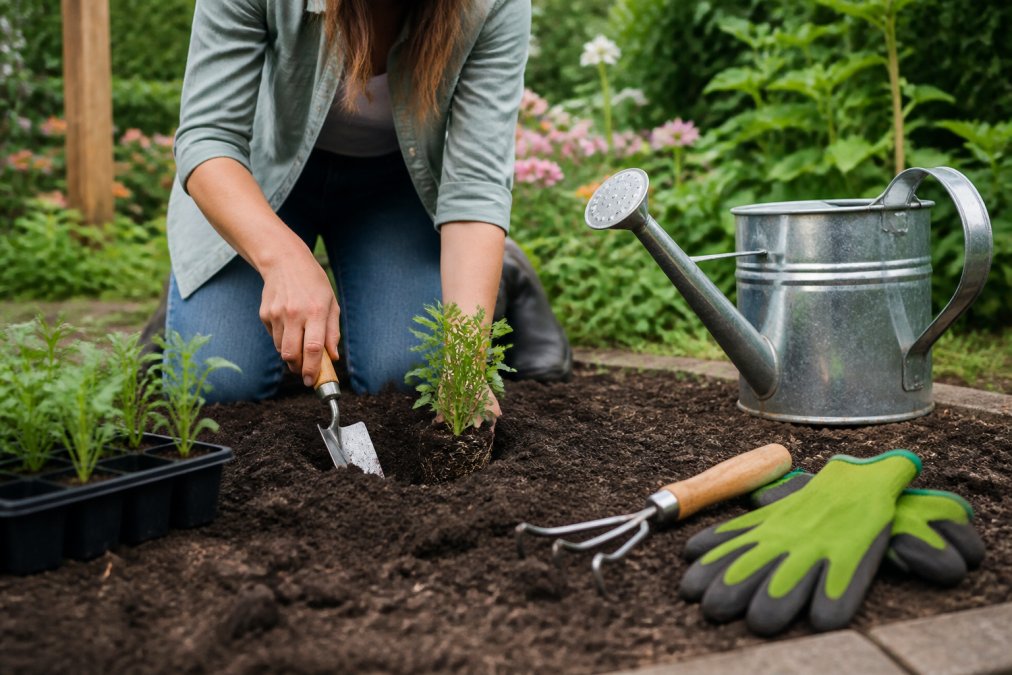
A trowel, hand fork and weeder are the three hand tools you will reach for constantly. Buy these first, because planting, weeding and transplanting all depend on them.
Here is what each one does:
- Trowel - digs planting holes, moves soil and lifts seedlings.
- Hand fork - loosens soil, breaks up clumps and lifts weeds.
- Weeder - pulls taproots like dandelions without disturbing nearby plants.
Digging and Soil Preparation Tools
A spade, garden fork and cultivator handle the heavy work: turning soil, breaking up compacted ground and mixing in compost or mulch. A spade cuts clean edges; a fork is better for clay and rocky ground because it pushes through rather than slicing.
Pruning and Cutting Tools: Secateurs, Loppers and Shears
Secateurs are the single most important cutting tool a beginner owns. They handle stems up to roughly a finger's thickness, which covers deadheading, light pruning and shaping most shrubs.
Watering and Irrigation Essentials for Beginners
Watering is where beginners lose the most plants, usually by doing it too often and too shallowly. The goal is to get water to the root zone, not the leaf surface, and to water deeply enough that roots grow down rather than spreading across the surface.
A few extras worth knowing before you buy:
- Mulch, a 5-7 cm layer of straw, bark or sugarcane mulch slows evaporation and cuts watering frequency noticeably.
- Watering can size, a 5-9 litre can is manageable for most people; larger cans get heavy once full.
- Rainwater tanks, if you have space, a small tank connected to a downpipe reduces reliance on mains water and gives you chlorine-free water for pots.
- Water crystals or wetting agents, useful in sandy soils and pots, but they are a supplement, not a substitute for deep watering.
Waterwise gardening and irrigation guidance
Ergonomic Gardening Tools for Beginners: Grip Comfort and Joint Support
Ergonomic gardening tools for beginners matter more than most guides admit. If you have arthritis, reduced grip strength or a bad back, tool design decides whether you can garden at all.
What to look for:
- Thicker, padded handles - easier to grip and less strain on the fingers.
- Long-handled tools - let you work standing rather than stooped.
- Ratchet pruners - multiply your cutting force so weaker hands can still prune.
- Kneelers or a low stool - take pressure off knees and lower back.
Best Gardening Tools for Small Spaces: Balconies, Courtyards and Pots
The best gardening tools for small spaces are compact versions that store easily and suit container growing. On a balcony or in a courtyard, you rarely need full-size digging tools.
A small-space kit looks like this:
- Hand trowel and hand fork
- Compact watering can
- Bypass secateurs
- A tool tote that hangs or stacks
How to Maintain Garden Tools: Sharpening, Cleaning and Rust Prevention
Learning how to maintain garden tools is what separates a kit that lasts a decade from one you replace every year. The routine is simple and takes minutes.
- Clean after every use - scrape off soil with a wire brush or stiff rag.
- Dry thoroughly - moisture is what causes rust, not air.
- Sharpen blades - a few passes with a file or sharpening stone restores a cutting edge.
- Oil metal surfaces - a light wipe of oil on carbon steel heads keeps rust off.
- Store dry and hanging - off the floor, away from damp.
| Task | Frequency | Time Needed |
|---|---|---|
| Wipe down and dry | After every use | 2 minutes |
| Sharpen blades | Every 10-15 uses | 5 minutes |
| Oil metal parts | Monthly | 3 minutes |
| Deep clean and inspect handles | Start and end of season | 20 minutes |
Protective Gear, Safety Equipment and Tool Storage
Protective gear is the part of the kit beginners skip, then wish they had not. Gardening gloves protect against thorns, splinters, blisters and soil-borne irritants, and a decent pair is not optional. Look for a snug fit with a reinforced palm and fingertips, loose gloves slip on tools and cause more hand strain than bare hands. Nitrile-coated gloves suit wet, muddy work; leather or synthetic leather suits pruning and thorny shrubs.
Beyond gloves:
- Eye protection, wear it when pruning overhead branches, using a line trimmer, or working under shrubs where twigs flick back. Safety glasses or goggles both work; the key is that they stay on.
- Closed shoes or boots, never dig, mow or use a fork in open-toed footwear. Steel-capped boots are overkill for most home gardens, but a sturdy closed shoe with grip is the minimum.
- Hearing protection, if you use a mower, line trimmer or chipper, foam plugs or earmuffs cost little and prevent long-term damage.
- Sun protection, a wide-brimmed hat, long sleeves and sunscreen. Gardening is outdoor work, often in the middle of the day, and sun damage accumulates quietly.
- Knee protection, a kneeler or knee pads take pressure off knees during planting and weeding, and a kneeler that flips into a seat doubles as a low stool.
Tool storage when you have no shed
Storage is where small-space gardeners get stuck. You do not need a shed to keep tools dry and within reach, you need a system that suits your space.
For balconies, courtyards and apartments:
- A hanging tool tote, canvas or waxed cotton totes with a shoulder strap store flat and hang on a hook behind a door.
- Wall-mounted hooks or a rail, a simple rail with S-hooks holds long-handled tools vertically and keeps them off the floor.
- A lockable outdoor storage box, a bench-style box doubles as seating and keeps tools out of the weather.
- A bucket or caddy, the cheapest option, and it works. Drill a few drainage holes so wet tools do not sit in water.
- A vertical rack in a cupboard, if you have an entry cupboard or laundry, a slim rack keeps tools tidy and out of the way.
Safe Work Australia guidance on outdoor and garden equipment
Conclusion: Build Your Kit One Tool at a Time
The temptation is to buy everything at once and end up with a shed of tools you never touch. Start with the hand tools, add digging and cutting equipment as your garden grows, and build the maintenance habit from the first week.
Frequently Asked Questions
What are the basic gardening tools needed for a beginner?
Start with six tools: a hand trowel for planting, a hand fork for weeding, secateurs for pruning, a spade for digging, a watering can, and a pair of gardening gloves. These cover planting, weeding, pruning, digging and watering, which are the tasks you will do most often. Add a garden rake and loppers later as your garden grows. Buy mid-range carbon steel or stainless steel options rather than the cheapest set, because cheap blades dull quickly and rust fast.
How do I choose the right gardening tools for my soil type?
Heavy clay soil needs a sturdy spade with a sharp edge and a mattock or cultivator to break up compacted ground. Sandy soil drains fast, so a hand fork and trowel are usually enough for planting and weeding. If your soil is rocky, choose a soil knife or a narrow trowel that can work around stones. Test your soil by squeezing a handful: if it holds shape and feels sticky, it is clay; if it crumbles, it is sandy.
How should I maintain my gardening tools to ensure longevity?
Clean soil off blades after every use with a wire brush or dry cloth. Dry tools completely before storing them, because moisture causes rust. Sharpen secateurs and pruning shears every 10 to 15 hours of use with a diamond file or sharpening stone. Oil metal parts lightly with a few drops of machine oil, and store everything in a dry shed or covered tool tote. Well-maintained carbon steel tools can last a decade or more.
Are ergonomic gardening tools worth the investment?
If you have arthritis, carpal tunnel, or simply find standard handles uncomfortable, ergonomic gardening tools for beginners are worth it. Look for padded non-slip grips, handles that keep your wrist in a neutral position, and lightweight aluminium or fibreglass shafts. Ratchet pruners reduce hand strain by letting you squeeze in stages rather than one hard cut. The extra cost is usually small, and the reduction in hand fatigue during long sessions is noticeable.
What are the best gardening tools for small spaces like balconies?
For balconies and courtyards, choose compact versions: a mini trowel, a small hand fork, bypass secateurs, a 1.5-litre watering can with a narrow spout, and a folding pruning saw. A vertical tool tote or wall-mounted rack keeps everything within arm's reach without taking up floor space. Skip full-size spades and rakes, which are awkward in tight areas. A soil knife is also useful for potting and transplanting in containers.
How do I stop my gardening tools from rusting?
Rust prevention comes down to three habits: dry tools before storage, keep them off damp concrete floors, and apply a light coat of oil to metal surfaces every few weeks. If rust appears, remove it with steel wool or fine sandpaper, then oil the area. Store tools in a dry shed, a sealed plastic tub with a moisture absorber, or a breathable canvas tote rather than a sealed plastic bag, which traps condensation.
Starting a garden is less about how much you spend and more about choosing tools you will actually maintain. Oddities & Ends makes it easy to find practical outdoor gear without the guesswork, with a curated selection and delivery across Australia. Standard delivery is $11; Express is $15 where available. Shop now and build a kit that lasts.