
Last Updated: October 30, 2026
Quick Summary
To learn how to avoid shipping delays in Australia, confirm your address and postcode before paying, check the store's dispatch deadline and handling time, and add a seasonal buffer for peak periods and regional addresses. Tracking the parcel and booking redelivery promptly prevents a missed card from becoming a return to sender.
- An inaccurate address is the single most avoidable cause of a failed delivery.
- A dispatch deadline is the latest time an order can leave the warehouse and still hit its estimate.
- International clearance typically adds 2-10 business days, longer if inspection is triggered.
- Late November to mid-December is typically the busiest period for parcel volumes.
- Outside peak periods, two to three extra days of buffer is usually enough.
Table of Contents
- Why Parcels Get Held Up: The Causes That Matter Most
- Your Online Shopping Delivery Checklist Before You Pay
- How to Check If an Online Store Is Legitimate
- Domestic vs International: Where Delays Come From
- Planning Around Peak Season, Weather and Regional Risk
- What to Do When an Online Order Is Delayed
- How to Contact a Retailer About a Late Delivery
- Choosing a Store That Gets Parcels There on Time
- Frequently Asked Questions
Why Parcels Get Held Up: The Causes That Matter Most
Most delayed parcels stall on a handful of predictable problems, and almost all can be fixed before you pay, which is the core of how to avoid shipping delays in Australia. The same culprits show up again and again: a dispatch backlog, a wrong address, or a missed redelivery card.
- Processing backlogs at the warehouse
- Wrong or incomplete addresses on the parcel label
- Missed redeliveries when nobody is home
Each one has a practical counter-move. Below, we walk through them, then give you a checklist to run before every online order.
Processing Backlogs and Dispatch Deadlines
A dispatch deadline is the latest time an order can leave the warehouse and still hit its delivery estimate. Miss it and the parcel sits in a backlog, sometimes for days.
Check the stated handling time before checkout. If a store says "ships in 3-5 business days," plan for that on top of the delivery estimate, a common mistake is reading the delivery estimate as the total wait.
Address Errors, Labeling and Missed Redeliveries
An inaccurate address is the single most avoidable cause of a failed delivery.
If you auto-fill your address, check the suburb and postcode match, auto-fill often keeps an old address from a previous order.
If a courier leaves a card and you miss the redelivery window, the parcel can be returned to sender. Track the delivery status and book redelivery promptly.
Your Online Shopping Delivery Checklist Before You Pay
Run this checklist every time, and you cut most delivery delays before they start. It takes two minutes.
- Confirm the delivery address, including unit number and postcode
- Check the stated dispatch deadline and handling time
- Read the delivery estimate for your area, not just the city
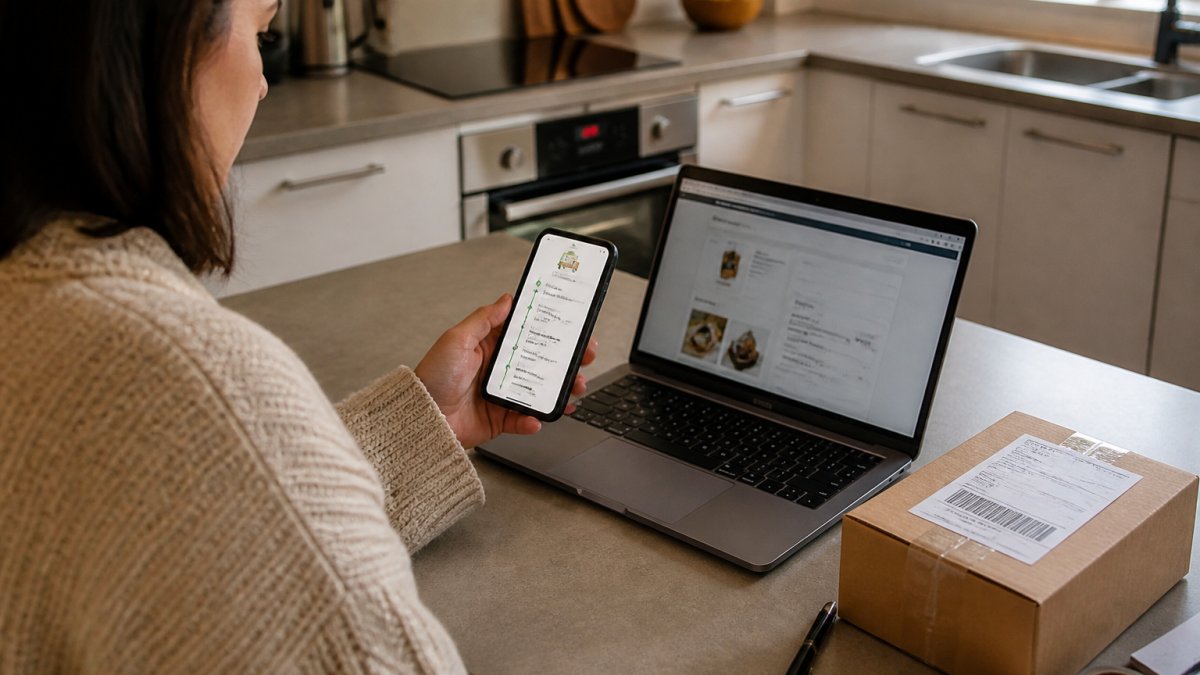
A store with clear shipping terms is usually a store that ships on time. Vague terms are a warning sign.
How to Check If an Online Store Is Legitimate
A legitimate online store shows a real business behind it: an Australian Business Number, a physical contact address, clear refund terms, and reviews you can trace. If any of those are missing, slow delivery is the least of your worries.
- Search the store's ABN on the Australian Business Register.
- Look for a real contact page with an email or phone number.
- Read the refund and shipping policy in full.
- Check reviews on more than one site, not just the store's own.
- Test customer service with a quick question before ordering.
For a shortlist of stores that get the basics right, see our guide to the best online stores for home. It saves you the guesswork.
Domestic vs International: Where Delays Come From
Domestic and international parcels fail for different reasons. A domestic parcel usually stalls on processing, address errors, or a service disruption. An international shipment adds customs, biosecurity, and import documentation, which changes how you prevent delays and who is responsible when something goes wrong.
Here is the practical split:
| Risk factor | Domestic parcel | International parcel |
|---|---|---|
| Main delay trigger | Dispatch backlog, address error, carrier disruption | Customs hold, incomplete declaration, biosecurity inspection |
| Who fixes it | Sender or carrier | Sender (documentation), importer (duties/taxes), carrier (clearance) |
| Typical added wait | 1-3 days for redelivery or re-dispatch | 2-10 business days for clearance, longer if inspection is triggered |
| Key document | Address label and tracking number | Customs declaration, commercial invoice, and permits where required |
| Prevention focus | Confirm address and dispatch deadline | Confirm declaration accuracy and check import eligibility before ordering |
Domestic delays are mostly local and recoverable. International delays are mostly paperwork-driven and can escalate quickly if the declaration is wrong.
Customs Declarations and Clearance Paperwork
A customs declaration lists what is in the parcel and its value. If the declaration is incomplete, the value looks wrong, or the goods are restricted, customs clearance stops and the shipment waits. The sender is responsible for accurate shipping documentation, and the delay can land on the recipient.
Prevention moves for international orders:
- Ask the sender to declare contents and value accurately. A vague description like "gift" or "sample" invites scrutiny.
- Check whether the goods are permitted for import before you order. Some items need permits or are prohibited outright.
- Expect clearance time on top of transit time. A quoted "5-7 business days" often excludes customs.
For current rules and duty thresholds, check the Australian Border Force guidance on importing goods and the DAFF biosecurity import conditions before you order from overseas. Both publish updated guidance that changes more often than most shoppers expect.
Carrier Selection and Service Levels
The carrier sets the ceiling on how fast a parcel can move and how much visibility you get. For domestic parcels, the trade-off is speed versus cost: express services cut transit time but rarely fix a dispatch backlog.
When comparing services, look at:
- Stated transit time, and whether it starts from dispatch or from order.
- Tracking granularity, scan-level updates versus a single "in transit" status.
- Cutoff times, the daily time after which a parcel waits until the next business day.
A cheap service with poor tracking costs more in follow-up time than it saves in postage. For business senders, the cheapest per-parcel rate is rarely the lowest total cost once delays and enquiries are counted.
Planning Around Peak Season, Weather and Regional Risk
Peak season and weather are the two disruptions you cannot control, but you can plan around them. Most advice stops at "order earlier", the useful version is a calendar of when the network is under strain and a map of where transit times stretch.
The Seasonal Risk Calendar
Delivery networks in Australia follow a predictable annual rhythm. Plan around these windows rather than discovering them at checkout:
- Late November to mid-December, the Black Friday/Cyber Monday sales and the pre-Christmas rush, which is typically the busiest period for parcel volumes.
- January, post-holiday returns and backlog clearance. New orders can sit behind returns processing.
- Easter and long weekends, public holidays pause pickups and deliveries. A parcel dispatched on the Thursday before a long weekend can lose two or three transit days.
Regional and Remote Transit Realities
Regional delivery is where estimates stretch most. A parcel that takes two days in a metro area can take a week or more further out, and remote addresses may only receive deliveries on limited runs, a missed run can add a week.
Practical moves for regional orders:
- Add transit time based on your distance from the nearest major hub, not the capital city.
- Check whether the carrier services your address directly or hands off to a local agent, which adds a day or more.
- Track closely once the parcel reaches the nearest depot; the last leg is where most regional delays occur.
Watching for Service Disruptions
Carriers publish live service updates during weather events and peak periods. Before a big order, check the Australia Post delivery network updates for current disruptions. For business senders, subscribe to carrier alerts so you can notify customers before they ask.
What to Do When an Online Order Is Delayed
When an online order is delayed, check the tracking and the store's stated delivery window first. If the parcel is past that window, contact the retailer with your order number and ask for a status update.
Work through it in this order:
- Recheck the tracking for a service update
- Confirm your delivery address was correct
- Contact the retailer with your order number
- Ask for a new delivery estimate in writing
- If it never arrives, ask about a refund
For a delayed or lost parcel, know your options up front. Read the store's shipping policy so you know the stated timelines, and check the refund policy in case the order is cancelled or never turns up.
How to Contact a Retailer About a Late Delivery
Contact a retailer about a late delivery by using their stated contact channel, quoting your order number, and stating the delivery estimate you were given. Keep it short and factual.
Use this template:
Hi, my order [order number] was due on [date] but has not arrived. The tracking shows [status]. Could you confirm the current delivery status and a new estimate? Thanks.
Send it through the retailer's official contact channel, not social media. Keep a copy of the reply. If the parcel is genuinely lost, that paper trail supports a refund request.
Choosing a Store That Gets Parcels There on Time
The best way to avoid delivery delays is to buy from stores that are clear about dispatch, tracking and delivery windows. That clarity is worth more than a slightly lower price.
At Oddities & Ends, we offer Australia-wide delivery, free delivery across Australia, and a curated range of practical finds for home, pets and everyday life. If you are weighing whether a curated store is worth it, our honest guide to whether curated shopping is worth the cost breaks down the trade-offs.
The real difference between a store that ships on time and one that does not comes down to how clearly it sets expectations. Pick stores that state the dispatch deadline and delivery window up front.
Frequently Asked Questions
How can I avoid shipping delays when shopping online?
Start with the store, not the parcel. Check that the retailer lists a real business address, an Australian contact number and clear delivery timeframes before you order. Enter your address exactly as Australia Post formats it, including unit numbers and postcode. Choose a delivery address where someone will actually be during the day, and keep your tracking notifications switched on. Ordering earlier than you think you need to also helps, especially in the weeks before Christmas or during major sale events when dispatch queues build up.
Does choosing express delivery prevent delays?
Express delivery speeds up the transit leg once a parcel is with the carrier, but it does not fix a slow warehouse. If an item is on backorder or the store takes five days to dispatch, paying for express still leaves you waiting. Express also does not protect you from weather disruption or peak-season network congestion. Check the advertised dispatch timeframe separately from the delivery estimate, and only pay extra for express when the item is confirmed in stock.
How long should I wait before contacting a retailer about a late order?
Wait until the delivery window the retailer advertised has passed, then make contact in writing. If tracking shows no movement for more than three business days past the estimated delivery date, that is a reasonable trigger. Include your order number, the tracking reference and the date you expected delivery. Keep the message factual and ask for a specific resolution, such as a replacement, refund or investigation with the carrier. Written contact also gives you a record if you need to escalate.
Can an incorrect delivery address cause a shipping delay?
Yes, and it is one of the most common and most avoidable causes. A missing unit number, a street type typo or a wrong postcode can send a parcel to the wrong depot or back to the sender, adding days or weeks. Always copy your address from a saved source rather than retyping it, and double-check the postcode against your suburb before paying. If you spot an error after ordering, contact the retailer immediately, because changes are far easier before dispatch than after the parcel is in the delivery network.
Delivery delays are frustrating, but most are preventable with a quick check before you pay. Oddities & Ends makes it easier: shop a curated range with Australia-wide delivery, free delivery across Australia, and clear tracking from dispatch to doorstep. Get started with Oddities & Ends and spend less time chasing parcels and more time enjoying what you ordered.
