
Last Updated: October 29, 2026
Quick Summary
When you shop local with Australian-owned retailers, more of each dollar recirculates through local wages, suppliers and services instead of flowing to overseas headquarters and shareholders. The benefit is real but conditional, depending on ownership structure, supply chain and where owners spend their income. Check the ABN, ownership statement and supplier story before trusting a local claim.
- Local ownership affects where profit, wages and tax revenue land; local production affects supply chains and manufacturing jobs.
- Set a fixed local-spend target, even one purchase a fortnight, to build the habit without overspending.
- Australian-made means substantially made here, while Product of Australia means all significant ingredients or components are Australian.
- Locally sold is the weakest claim: a local shop can sell imported goods.
- Place one order with an Australian-owned store this month and build from there.
Table of Contents
- Why Shopping Local Puts More Money Back Into Your Community
- How to Support Australian Businesses Without Overspending
- Local Jobs, Stronger Small Businesses, and Community Ties
- How to Buy Australian-Made Products (and What That Label Actually Means)
- Finding Genuine Australian-Owned Online Stores
- Personal Service and Relationships You Won't Get From a Mega-Retailer
- What to Ignore When You Shop Local
- Start With One Order From an Australian-Owned Store
- Frequently Asked Questions
Why Shopping Local Puts More Money Back Into Your Community
Every dollar spent with an Australian-owned retailer tends to stay in the country longer. That's the core case for shopping local, and it's simpler than most people think. When you shop local, you're not just buying a product. You're supporting a business that can reinvest in local suppliers, staff and causes.
The benefits of shopping local australian retailers are real, but they're not magic. They come down to how money moves once you hand it over.
The Economic Multiplier, Explained Simply
An economic multiplier describes how many times a dollar changes hands before it leaves a region. Spend with a multinational and much of that money flows out to overseas headquarters, offshore manufacturing and global shareholders. Spend with an Australian-owned business and more of it recirculates through local wages, local suppliers and local services.
We won't pretend to quote a precise multiplier figure here, because those numbers vary widely by study and methodology. What we can say is the direction is consistent: locally owned businesses tend to keep more value in the community than large chains do. The Australian Bureau of Statistics business data shows small businesses make up the overwhelming majority of actively trading businesses in the country, which means local spending touches a lot of households.
Separating Local Ownership From Local Production
Most "shop local" claims blur two different things: where a business is owned, and where its products are made. They matter for different reasons, and conflating them is how shoppers get misled.
- Local ownership affects where profit, wages and tax revenue land. An Australian-owned retailer paying Australian staff and Australian rent keeps more of each dollar in the domestic economy, even if some stock is imported.
- Local production affects supply chains, freight distances and manufacturing jobs. A product made here supports local factories and shorter transport, but the business selling it may be foreign-owned.
A useful way to think about it: ownership determines who captures the margin, production determines where the physical value was created. Neither is automatically "better", but knowing which one you're choosing lets you spend according to what you actually care about.
What the Evidence Actually Supports
Broad claims that "money stays local" deserve scrutiny. The honest position is that the effect is real but conditional, and it depends on three things:
- Ownership structure. A locally owned business with local suppliers recirculates more than a local franchise of an overseas brand, where franchise fees and royalties leave the country.
- Supply chain. A local retailer importing everything it sells keeps less value locally than one sourcing from Australian wholesalers and makers.
- Spending patterns. Local business owners who live in the area tend to spend their income locally, on local services, trades and suppliers, which is where much of the multiplier effect comes from.
That's the theory. Here's what it looks like in practice.
A Quick Reality Check Before You Trust a "Local" Claim
Not every business flying a local flag is locally owned. Before you accept the multiplier argument for a particular retailer, check:
- The ABN and business address on the site's About or contact page. A registered Australian business number is a start, but it doesn't prove local ownership.
- The ownership statement. Genuine local operators usually say plainly who owns the business. Vague phrases like "proudly local" without a name or address are a warning sign.
- The supplier story. If the store can tell you where its stock comes from, that's a good signal it's genuinely embedded in local supply chains rather than drop-shipping.
If a retailer passes those checks, the community-benefit case is credible. If it doesn't, treat the local label as marketing until proven otherwise.
How to Support Australian Businesses Without Overspending
You don't need a bigger budget to support Australian businesses. You need a better plan. Shopping local on a tight budget is entirely doable, and it starts with being deliberate about where your money goes rather than spending more of it.
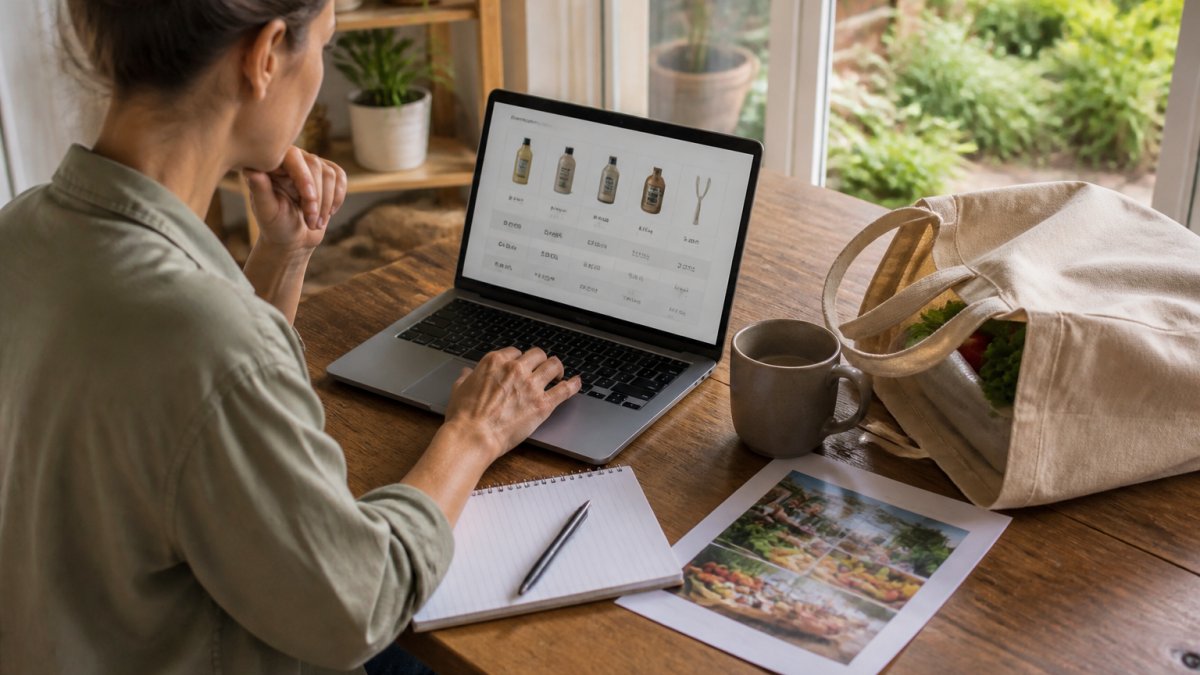
Here's a budget-friendly approach:
- Set a fixed local-spend target. Even one purchase a fortnight builds the habit.
- Compare total cost, not sticker price. Factor in delivery and returns.
- Buy local for the categories you care about most. You can't shift everything at once.
- Watch for genuine deals. Local retailers discount too, especially on seasonal stock.
- Batch your orders. Fewer, larger orders often mean better value and less waste.
If you want to stretch your first local order further, it's worth checking current trending deals before you buy. A good deal on something you actually need beats full price on something you don't.
Local Jobs, Stronger Small Businesses, and Community Ties
Local spending protects local jobs, and local jobs keep communities intact. That's the practical link most shopping guides skip over. When a small business grows, it hires. When it hires, it trains local people. When those people stay, the community holds together.
The benefits stack up in ways that are easy to overlook:
- Employment: small businesses are among the biggest employers in many regional areas.
- Business survival: steady local custom gives small operators the buffer they need to ride out slow periods.
- Personal service: local owners know their customers and answer their own phones.
- Customer loyalty: relationships built over years keep shoppers coming back.
Where Community Groups and Local Causes Fit In
Local businesses sponsor the things that make a town feel like a town: sports clubs, school fundraisers, charity drives and community events. A multinational rarely does the same at street level. When you support Australian businesses, you're indirectly funding those local causes, because the business owner is the one writing the cheque for the raffle.
That's a quiet benefit, but it matters. Community prosperity is built one small business at a time.
How to Buy Australian-Made Products (and What That Label Actually Means)
Buy Australian-made products and you're supporting local manufacturing, but the label needs careful reading. "Australian-made" is not a free-for-all phrase. It's governed by Australian Consumer Law country of origin rules, which set out when a business can legally claim a product was made here.
Here's the distinction that trips most shoppers up:
- Australian-made means the product was substantially made or transformed in Australia. It does not mean every ingredient or component is Australian.
- Product of Australia is a stricter claim, meaning all significant ingredients or components come from Australia.
- Australian-owned describes who owns the business, not where the product is made.
A product can be Australian-owned but made overseas. It can be made here but owned offshore. Neither label is a lie; they simply answer different questions. When you buy Australian-made products, check which claim is actually on the pack.
Finding Genuine Australian-Owned Online Stores
Genuine Australian-owned online stores are easier to spot once you know what to check. It takes about two minutes per store, and it saves a lot of disappointment.
Start with the business's About page. Look for an ABN, a physical address and a clear statement of ownership. Check reviews on independent platforms, not just the store's own site. Confirm delivery terms and returns policies before you order. A legitimate local operator will state these plainly.
For a shortcut, you can browse a list of Australian online home stores that have already been vetted. If you want concrete examples of stores selling trending lifestyle products, it's worth seeing where to buy trending lifestyle products online so you know what a genuine local storefront looks like.
Australian-Made vs Australian-Owned vs Locally Sold
These three terms get used interchangeably, and they shouldn't be. Here's how they differ:
| Term | What it tells you | What it doesn't tell you |
|---|---|---|
| Australian-made | Product was substantially made here | Who owns the business |
| Australian-owned | The business is locally owned | Where the product is made |
| Locally sold | A local business sells it | Origin or ownership of the product |
Locally sold is the weakest claim of the three. A local shop can sell imported goods. That's not a problem, but don't confuse it with Australian-made.
Personal Service and Relationships You Won't Get From a Mega-Retailer
Personal service is the benefit shoppers notice fastest. When something goes wrong with an order, a clear route to a real person makes all the difference.
At Oddities & Ends, we curate a selection of trending and practical finds across home, pets, beauty and outdoor categories, and we deliver Australia-wide with free delivery.
What to Ignore When You Shop Local
Not every local-benefit claim holds up. Some are overstated, and a few are misleading. Here's what to filter out.
Watch out: "local" badges on marketplace listings often mean nothing. A third-party seller can slap "local" on a listing while shipping from overseas. Check the seller's actual business details before you trust the label.
Also ignore vague environmental claims. "Eco-friendly" and "sustainable" are not regulated terms in the way country-of-origin claims are. If a store can't tell you specifically what makes a product lower impact, treat the claim as marketing. If you want an honest take on whether paying more for curation actually pays off, read whether curated shopping is worth the cost.
Start With One Order From an Australian-Owned Store
The gap between intending to shop local and actually doing it is one order. That's it. You don't need to overhaul your shopping habits overnight. Place one order with an Australian-owned store this month, see how it goes, and build from there.
Before you do, it's worth knowing who you're buying from. We're Oddities & Ends, and we've set up our store to make local shopping convenient: a curated range of practical and trending products and free delivery across Australia. If a curated selection saves you browsing time and a local operator answers your questions, that's the local-shopping case made in practice.
Get started with Oddities & Ends and discover practical finds for home, pets and everyday life.
Frequently Asked Questions
What are the benefits of shopping with local retailers?
Money spent with local retailers tends to stay in the area longer. Those businesses employ local staff, use local suppliers and pay local rent, so each dollar recirculates through the community.
How can I tell whether an online retailer is Australian-owned?
Check the About page for an ABN and a registered business address, not just a .com.au domain. Look for an Australian phone number and a returns policy that references Australian consumer law. Read the fine print on delivery times before you order. If the site is vague about who runs it, search the business name on the Australian Business Register before you buy.
Is it cheaper to buy from overseas online stores?
Sometimes the sticker price is lower, but the gap narrows once you add international shipping, currency conversion and long wait times. Returns become expensive or impossible, and you lose the protections Australian consumer law gives you for goods bought from Australian suppliers.
Does shopping local actually create jobs?
It supports them. Small businesses are among the largest employers in the country, and their staffing decisions respond directly to sales volume. A retailer that has a strong quarter hires more staff, extends hours and takes on extra delivery drivers. That link is more direct than with a multinational, where hiring and investment decisions are made offshore and rarely track local sales one-to-one.
