
Table of Contents
- Why Safe Non Toxic Pet Toys for Dogs Matter More Than Ever
- Safe Dog Toy Materials: What to Look For and What to Avoid
- Eco-Friendly Dog Toys: Do Sustainable Claims Actually Hold Up?
- Durable Dog Toys: Matching Chew Strength to the Right Toy
- How to Clean Dog Toys (and When to Throw Them Out)
- Common Mistakes When Buying Safe Non Toxic Pet Toys for Dogs
- Frequently Asked Questions
Last Updated: October 13, 2026
Why Safe Non Toxic Pet Toys for Dogs Matter More Than Ever
Dogs explore the world with their mouths, which means every chew, squeak and tug is a chance for whatever is in a toy to end up inside your dog.
At Oddities & Ends, we curate pet products for households across the country.
Here's the uncomfortable part most buying guides skip: there is no single mandatory safety standard that every dog toy must pass before it hits a shelf.
Safe Dog Toy Materials: What to Look For and What to Avoid
The safest dog toy materials are natural rubber, organic cotton, hemp rope and wool, because they contain fewer additives that can leach when chewed.
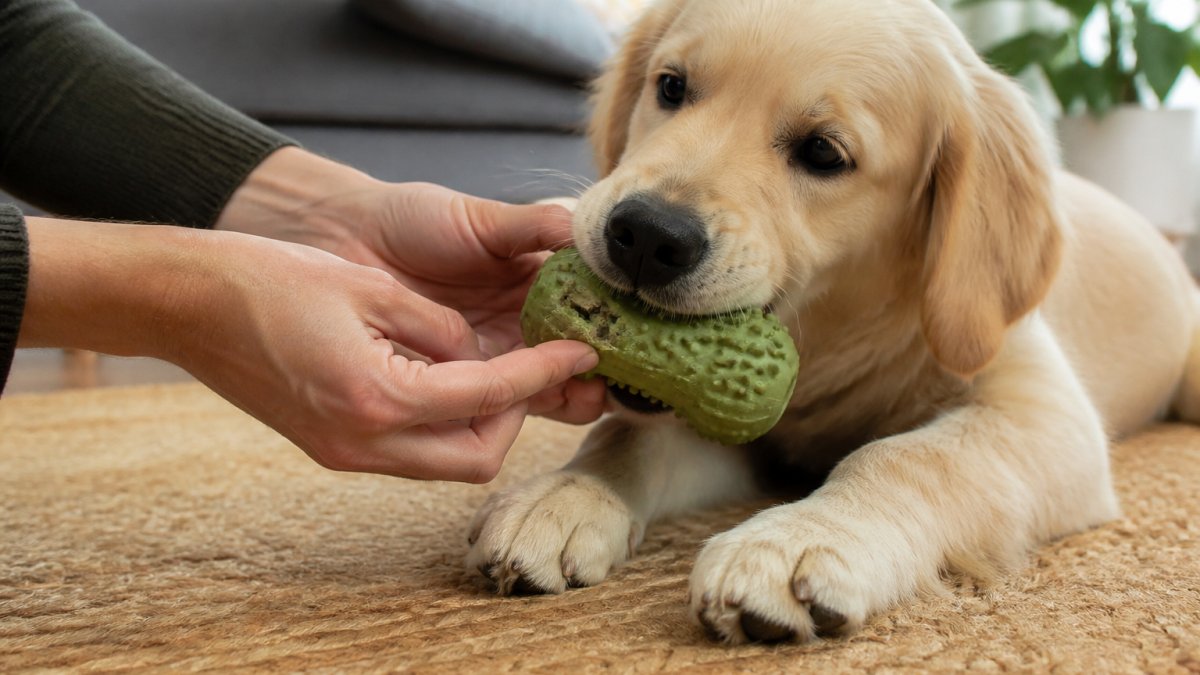
Natural Rubber, Organic Cotton, and Hemp Rope
Natural rubber is tapped from rubber trees and is naturally elastic, which is why it's the go-to material for chew toys that need to bounce back into shape.
Organic cotton suits soft toys and plush companions.
Hemp rope is the strongest of the plant-based options and works well for tug and fetch. Hemp fibre is naturally resistant to mould and holds up to repeated wet-dry cycles better than many alternatives.
Other materials worth knowing:
- Wool exterior for plush toys, a durable natural fibre that resists odour
- Food-grade silicone for treat-dispensing toys, held to a higher purity standard than industrial silicone
- Recycled materials for beds, ropes and fill, which keep waste out of landfill without compromising safety
Red Flags: Phthalates, BPA, and Mystery Plastics
Certain chemical families deserve a hard no. Phthalates are used to soften hard plastics and are linked to hormone disruption in animals. BPA (bisphenol A) is another plastic additive with similar concerns. Neither belongs in something a dog chews daily.
When you're reading labels, treat these as warning signs:
- "Plastic" with no further detail
- Soft, shiny, strongly scented plastic that flexes easily
- Painted surfaces or glued-on decorations that can flake off
The practical rule: if a manufacturer won't tell you what a toy is made of, assume the worst and move on.
Eco-Friendly Dog Toys: Do Sustainable Claims Actually Hold Up?
Some do, and some are pure marketing. "Eco-friendly" is not a regulated term on pet products, so any brand can print it. What separates a real claim from a hollow one is specificity: a named material, a named certification, or a clear statement about what the toy is made from and where. The useful skill is not spotting the word "eco", it's knowing which claims can be checked and which cannot.
What Eco Claims Actually Mean (and What They Don't)
Most green language on dog toy packaging falls into a handful of categories, and each one carries a different level of proof:
- "Biodegradable", means the material will break down under the right conditions, but says nothing about how long that takes or whether those conditions exist in a backyard compost bin. A toy labelled biodegradable may still sit intact in landfill for years.
- "Compostable", a stronger claim, but only meaningful if it names a standard. Home-compostable and industrially-compostable are not the same thing, and most households cannot replicate industrial conditions.
- "Recycled", should state the percentage and the source. "Made with recycled materials" without a figure is close to meaningless.
How to Verify a Sustainability Claim
A claim you can act on usually points to something outside the packaging. Look for:
- A named certification body or standard printed on the toy or its tag, not just a logo
- A material breakdown by percentage (for example, "100% natural rubber" rather than "rubber blend")
- A manufacturer page that names the supplier or region of origin
If a brand makes a strong environmental claim but will not answer a direct question about material sourcing, treat the claim as unverified. That is not proof of greenwashing, but it is the same standard you would apply to any other safety claim on the label.
The Durability Trade-Off
Where sustainable claims most often fall short is durability. A compostable toy that falls apart in a week creates more waste than a durable one that lasts a year, so weigh longevity alongside the environmental story.
A practical way to compare: estimate how many weeks of normal play a toy will deliver, then divide the environmental cost of making and shipping it by that number.
Durable Dog Toys: Matching Chew Strength to the Right Toy
The most durable dog toy is the one matched to your dog's actual chewing behaviour, not the one with the highest price tag. A toy that's too soft for a heavy chewer becomes a choking hazard; one that's too hard for a gentle chewer can damage teeth.
Toy Selection by Dog Size, Age, and Chewing Behaviour
Size and age change the calculation more than most owners realise. Puppies need softer materials while their teeth and jaws develop. Senior dogs often do better with softer, easier-to-grip toys.
| Chewer Type | Best Material | Avoid | Why |
|---|---|---|---|
| Gentle / senior | Organic cotton, wool plush | Hard rubber | Softer jaws need give, not resistance |
| Moderate | Natural rubber, food-grade silicone | Thin plastic | Balances durability with safety |
| Heavy / power chewer | Thick natural rubber, hemp rope | Plush, thin squeakers | Withstands force without shattering |
| Puppy | Soft rubber, rope | Hard nylon | Protects developing teeth |
A simple test: press your thumbnail into the toy. If it dents easily, it's too soft for a power chewer. If it's hard enough that you can't mark it at all, it may be too hard for any dog's teeth.
How to Clean Dog Toys (and When to Throw Them Out)
Most dog toys can be cleaned with warm water and a pet-safe soap, then left to air dry completely before they go back to your dog. Fabric toys often tolerate a gentle machine wash, while rubber and silicone toys do best with a hand wash and a thorough rinse. The cleaning method matters less than the inspection that comes with it, every wash is a chance to catch wear before it becomes a swallowing risk.
Cleaning by Material
Different materials fail in different ways, so clean them differently:
- Natural rubber and silicone, hand wash in warm water with a mild pet-safe soap, rinse thoroughly, and air dry away from direct heat. Heat and sunlight accelerate cracking, so do not leave them on a sunny windowsill to dry.
- Organic cotton and wool plush, check the care tag first. Most tolerate a gentle machine cycle in a mesh laundry bag, but wool can felt and shrink. Air dry rather than tumble dry, which can break down fibres and loosen seams.
- Hemp and rope toys, these are the hardest to keep hygienic because the fibres hold moisture. Rinse, then soak briefly in a diluted pet-safe solution, rinse again, and dry somewhere with good airflow. A rope that stays damp is a bacterial reservoir.
A workable routine looks like this:
- Weekly: rinse rubber and silicone toys, check for cracks
- Fortnightly: wash fabric and rope toys, inspect seams and knots
- Monthly: deep clean anything that lives outdoors
Rope toys deserve special attention because they stay damp and can harbour bacteria. If a rope smells sour even after washing, it is done.
The Two-Minute Wear Inspection
Run this check on every toy at every wash. It is the single most effective habit for preventing ingestion injuries.
- Flex it. Bend the toy in both directions. Cracks, whitening at stress points, or a change in how it feels compared with when it was new are all early failure signs.
- Squeeze it. Press firmly along seams, joins and any attached parts. If a squeaker, eye, or limb shifts under pressure, it is a candidate for removal by your dog.
- Tug it. Give rope knots and stitched seams a firm pull. Frayed strands that come away in your hand are a swallowing hazard.
- Smell it. A persistent sour or chemical odour after cleaning means the material is holding something it should not.
- Check the size. A toy that has been chewed down to a size your dog could swallow whole should be retired regardless of condition.
When to Replace a Toy
Replace a toy when you see any of these:
- Cracks, splits or crumbling edges in rubber
- Exposed squeaker or stuffing
- Frayed rope strands your dog can swallow
For heavy chewers, expect a shorter replacement cycle than the packaging implies. A toy that is safe for a gentle chewer may be a swallowing risk for a power chewer within days, so match your inspection frequency to your dog's chewing intensity rather than to a calendar.
Common Mistakes When Buying Safe Non Toxic Pet Toys for Dogs
The biggest mistake is trusting the word "natural" on packaging. It has no legal definition for pet products, so it can mean almost anything. The second is buying by size alone and ignoring chewing strength, which is how gentle dogs end up with toys they can't damage and power chewers end up with shredded plush in an afternoon.
Other traps to watch for:
- Assuming a higher price guarantees safer materials (it doesn't)
- Skipping the label and buying on looks
- Leaving damaged toys in the rotation "just in case"
If you're ever unsure whether a toy is safe, err on the side of caution and replace it. No toy is worth a vet visit.
Frequently Asked Questions
What materials are safe for dog toys?
Natural rubber, organic cotton, hemp rope, wool, and food-grade silicone are generally considered safe dog toy materials. Look for toys labelled BPA-free, phthalate-free, and latex-free. Avoid toys with strong chemical smells, peeling paint, or loose glued parts. In Australia, there is no single mandatory certification for pet toys, so checking the material list and manufacturer transparency is your best guide. If a toy has no material information at all, treat that as a warning sign.
How can I tell if a dog toy is non-toxic?
Start with the label. A genuinely non-toxic toy will name its materials clearly, such as natural rubber or organic cotton, rather than vague terms like 'rubber compound'. Check for third-party testing claims, though these are voluntary in Australia. Smell the toy: a strong plastic or chemical odour often signals phthalates or low-grade materials. Squeeze it to check for flaking paint or loose parts. If the squeaker is easily accessible, that is a choking hazard regardless of material safety.
How do I clean dog toys safely?
Most rubber and silicone toys can be washed in warm water with a mild pet-safe detergent, then rinsed thoroughly and air-dried. Fabric and rope toys are best hand-washed to prevent fraying; check the care label first. Avoid bleach and harsh disinfectants, as residue can irritate your dog's mouth. For a deeper clean, a diluted white vinegar solution works for many materials. Inspect toys for cracks, tears, or loose squeakers after every wash, and replace anything showing significant wear.
Are rope toys safe for dogs to chew?
Rope toys are safe for supervised tug and fetch, but not ideal for heavy chewing. Dogs that shred rope can swallow strands, which may cause intestinal blockages. Hemp rope tends to be more durable than cotton and resists fraying longer. Always supervise rope play, trim loose strands as they appear, and replace the toy once it starts unravelling. If your dog is a determined chewer, a natural rubber chew toy is a safer outlet for that behaviour.
Finding genuinely safe non toxic pet toys for dogs shouldn't require a chemistry degree, but it does require knowing what to look for. At Oddities & Ends, we take the guesswork out by curating practical pet products with Australia-wide delivery and free delivery, so you can focus on playtime instead of label-reading. Explore our pet range and find durable, thoughtfully chosen toys your dog will actually love. Shop now.