
Table of Contents
- Why Shoppers Look for a SimplyWholesale Alternative for Lifestyle Products
- How This Curated Lifestyle Range Compares: Price and Category Table
- Best Lifestyle Products to Try First
- Safe Online Shopping Tips Before You Buy Lifestyle Products
- Australian Consumer Rights Online: What You're Entitled To
- How to Spot Fake Online Reviews on Lifestyle Retailers
- Delivery, Support and What Happens When Something Goes Wrong
- Conclusion
- Frequently Asked Questions
Last Updated: September 23, 2026
Why Shoppers Look for a SimplyWholesale Alternative for Lifestyle Products
The hunt for a reliable SimplyWholesale alternative for lifestyle products usually starts with the same frustration: a site that once felt like a bargain bin now feels like a gamble. A SimplyWholesale alternative for lifestyle products is any retailer selling the same broad mix of home, pet and everyday goods, but with clearer product information, visible support and dependable delivery.
How This Curated Lifestyle Range Compares: Price and Category Table
Most pages ranking for this query are brand-specific, telling you only what one supplier stocks. Here you get neutral criteria you can apply to any supplier, plus a worked example of how a curated range stacks up against the bulk-marketplace model.
The criteria that actually separate lifestyle suppliers
When you compare alternatives, five variables do most of the work.
| Criterion | What to check | Why it matters for lifestyle goods |
|---|---|---|
| Minimum order quantity (MOQ) | Lowest unit count per SKU, and whether it is per line or per order | Lifestyle ranges are wide and shallow; a high per-SKU MOQ forces you to over-buy slow movers |
| Shipping speed and method | Stated dispatch window, carrier, tracking, and whether freight is quoted per order or per item | Bulky items such as pet beds and fans are priced on cubic weight, not unit weight |
| Product quality signals | Material specs, dimensions, warranty length, and whether the supplier publishes test or compliance documentation | Cheap listings often omit the sleeping-area or battery-capacity figure that determines real-world use |
| Returns and remedy process | Who pays return freight, the claim window, and whether remedies follow the consumer guarantees | A generous returns policy is worthless if return postage exceeds the item's value |
| Support responsiveness | A phone number, a named contact, and a stated response time | Support quality is the single best predictor of how a fault will be handled |
Curated range versus bulk marketplace: a worked comparison
The table below shows how a curated lifestyle range typically differs from an open bulk marketplace on the same criteria. It is a model, not a claim about any named competitor.
| Criterion | Curated lifestyle range | Open bulk marketplace |
|---|---|---|
| Catalogue size | Narrow, every item vetted | Thousands of listings, mixed quality |
| MOQ | Often single units at retail, tiered pricing at volume | Low per-unit MOQ, but quality varies by seller |
| Shipping | Free or flat-rate domestic delivery with tracking | Freight quoted per seller, often slow and untracked |
| Quality control | Specs published per product | Specs frequently incomplete or copied |
| Returns | Single policy across the range | Policy set by each individual seller |
| Support | One contact point for the whole order | Fragmented across sellers |
How the range breaks down by category and price
For a concrete reference point, here is how a curated lifestyle range can be structured across the categories most households replace regularly.
| Category | Product | Price | Best For |
|---|---|---|---|
| Home and everyday | LED Motion Sensor Night Light Bar 60cm | $75.95 | Hallways, stairways, entryways |
| Home and everyday | 3-in-1 Foldable Wireless Charging Dock | $97.95 | Bedside tables, desks, travel |
| Home and everyday | Ergonomic Memory Foam Cervical Neck Pillow | $64.95 | Side, back and stomach sleepers |
| Pets and outdoor | Plush Square Calming Dog and Cat Bed 76cm | $100.95 | Dogs and cats up to 16 kg |
| Pets and outdoor | 2-Pack Pet Hair Removal Gloves | $50.95 | Couches, carpets, car seats |
| Pets and outdoor | Portable Rechargeable Camping Fan with LED Light | $72.95 | Camping, picnics, backyards |
| Beauty and personal care | Cordless Automatic Hair Curler | $64.95 | Travel styling, quick touch-ups |
| Beauty and personal care | Wireless Bluetooth Sleep Mask with Headphones | $52.95 | Flights, naps, side sleepers |
Best Lifestyle Products to Try First
New shoppers often freeze at the range of options, so start with categories where quality is easiest to judge. Home, pets and personal care cover the essentials most households replace regularly, and each has a clear standout.

Home and Everyday Convenience Picks
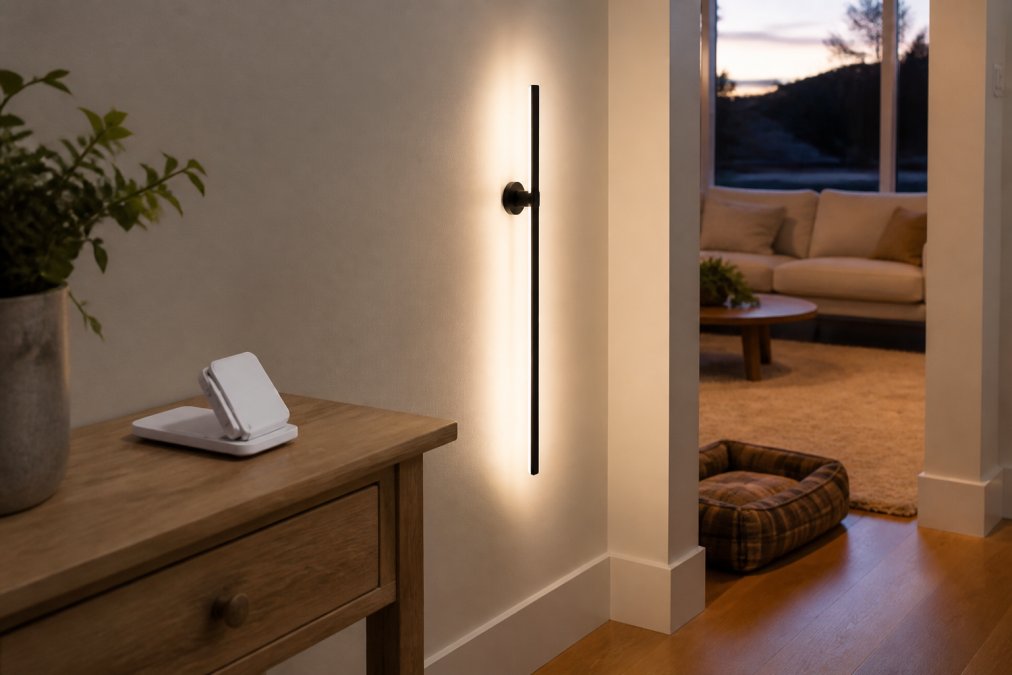
The LED Motion Sensor Night Light Bar ($75.95) is the practical pick for anyone tired of fumbling for switches at night. It activates automatically on motion and works indoors or outdoors, along hallways, patios and entryways.
Pet and Outdoor Picks
Pet owners who want quality rather than novelty should look at the Plush Square Calming Dog and Cat Bed ($100.95). Its modular five-pillow system, anti-slip base and removable, machine-washable cover make it practical rather than trendy.
Beauty and Personal Care Picks
The Cordless Automatic Hair Curler ($64.95) heats quickly, adjusts between 150°C and 200°C, and runs on a rechargeable battery, so no power point is needed. The Wireless Bluetooth Sleep Mask with Headphones ($52.95) pairs a blackout memory foam design with Bluetooth 5.0 audio and a washable build, suiting long flights and side sleepers.
Safe Online Shopping Tips Before You Buy Lifestyle Products
Safe online shopping starts before checkout, not after something goes wrong. Generic advice, check for a phone number, read the returns policy, only gets you so far. What most guides skip is a repeatable vetting process for an unfamiliar supplier, and any consideration of how and where the goods were made. Both matter more for lifestyle products than almost any other category, because the range is wide, the margins are thin and quality is hard to judge from a photo.
A supplier vetting checklist you can run in ten minutes
Work through these in order. A supplier that fails an early step rarely survives the later ones.
3-in-1 Foldable Wireless Charging Dock →
- Verify the business identity. Look for an Australian Business Number (ABN) and check it against the Australian Business Register. A trading name with no registered entity behind it is a red flag.
- Confirm a physical contact point. A street address and a phone number, not just a web form or a chat widget. Test the phone number during business hours.
- Read the delivery page for specifics. Stated dispatch windows, carriers, tracking and freight costs. Vague promises such as "fast shipping" without a timeframe are a warning sign.
- Read the returns policy for who pays return freight. This single line determines whether a faulty item is worth returning at all.
- Check the product page for real specifications. Dimensions, materials, battery capacity, warranty length. Specs copied verbatim across unrelated listings suggest a drop-shipped catalogue.
- Search the business name alongside the word "review" and read the negative results first. One or two complaints is normal. A pattern of unresolved delivery or refund issues is not.
- Test support before you buy. Send a pre-sale question and time the response. The answer you get before payment is the best version of the support you will ever receive.
Payment methods and your recourse
Payment method determines your leverage if something goes wrong. A credit card or recognised digital wallet gives you a paper trail and a dispute process. Direct bank transfers offer almost no recourse, and a supplier that only accepts them is asking you to carry all the risk.
The gap most guides ignore: ethical and sustainable sourcing
Price and volume dominate every competing guide, but a growing share of lifestyle shoppers want to know how a product was made before buying. That information is rarely volunteered, so you have to ask.
- Ask for the manufacturer's name and location. A supplier that cannot name its factory is either drop-shipping or unwilling to be transparent.
- Look for material disclosures. Recycled content, organic certifications or a stated country of manufacture are verifiable claims. "Eco-friendly" on its own is not.
- Check for a compliance statement. Electrical goods, children's items and pet products sit under specific Australian standards. A supplier that publishes which standards its products meet is doing the work for you.
- Ask about packaging. Plastic-free or recyclable packaging signals a supplier has thought about its supply chain end to end.
- Treat vague sustainability language as a gap, not a feature. Ethical sourcing claims without a named certification or factory are unverified.
Australian Consumer Rights Online: What You're Entitled To
Australian consumer rights online are set by the Australian Consumer Law and apply to online purchases exactly as in a physical store. You are entitled to a remedy if a product is faulty, significantly different from its description, or unfit for its stated purpose.
How to Spot Fake Online Reviews on Lifestyle Retailers
Fake reviews follow recognisable patterns, and learning them is the fastest way to judge whether a retailer deserves your money. Look for clusters of five-star ratings posted within days of each other, generic praise that never mentions a product detail, and reviewer profiles with only one review.
- Check whether reviews include photos from real customers
- Look for a spread of ratings rather than uniform praise
- Read the two and three-star reviews, which are hardest to fake
- Cross-check the same product on independent forums
Delivery, Support and What Happens When Something Goes Wrong
Delivery and support are where cheap retailers quietly fall apart. A retailer that can't say when your parcel will arrive, or answers problems with an automated reply, costs you far more in time than you saved at checkout.
Conclusion
Finding a retailer that stocks practical lifestyle products without the usual online shopping risks takes some checking. Oddities & Ends curates a smaller range across home, pets, beauty and outdoor categories, backs it with free Australia-wide delivery, and keeps support responsive when something goes wrong. Browse the range, pick a category to start with, and shop with a retailer that stands behind what it sells.
Frequently Asked Questions
How can I verify if an online store is legitimate before purchasing?
Check for a physical business address and an ABN, read the returns and delivery policy in full, and look for reviews spread across independent sites rather than only on the store's own page. Search the business name alongside words like 'refund' or 'delivery delay' to surface complaints. If a site lists no contact method beyond a web form, or prices look far below everyone else, treat that as a warning sign and shop elsewhere.
What should I look for when choosing an alternative to wholesale-style retailers?
Prioritise a clear product range over sheer volume, since a curated lifestyle products selection is easier to vet for quality. Check whether delivery times are stated up front, whether returns are straightforward, and whether support is reachable by a real person. A short, well-described catalogue with specific dimensions and materials usually signals more care than a listing with a photo and a price and nothing else.
How do I ensure my consumer rights are protected when shopping online?
Under the Australian Consumer Law, products must be of acceptable quality, match their description, and be fit for purpose. If an item arrives faulty or different from what was advertised, you're entitled to a remedy from the retailer, usually a repair, replacement or refund. Keep your order confirmation and photos of the problem, and raise the issue in writing so there's a record if you need to escalate it.
What are the signs of a trustworthy online marketplace?
Look for specific product photos rather than generic stock images, measurements listed in centimetres, and named materials instead of vague claims. A trustworthy store also publishes a returns window, a delivery estimate and a privacy policy. Reviews that mention particular details, such as how a pet bed held up after washing, tend to be more reliable than short five-star comments posted in bulk on the same day.
Are there Australian-based platforms for trending home and beauty products?
Yes, and the practical difference comes down to delivery and returns. A store shipping from within the country typically gets orders to metro and regional addresses faster than one sending everything from overseas. When comparing options, check the stated dispatch time, whether delivery is free, and how returns are handled, because those three factors affect the total cost more than a few dollars off the listing price.