
Last Updated: November 4, 2026
Quick Summary
To keep your pet clean after outdoor play, rinse muddy paws with warm water, wipe from the top of the paw down toward the toes, then dry thoroughly between the toes. For muddy fur, let the mud dry completely first, then brush out the loose dirt and spot-clean any remaining patches with a damp cloth.
- A quick paw wash takes minutes and saves your floors when a full bath isn't practical.
- Pet-safe wipes should be free of alcohol, bleach, and strong fragrances that dry out paw pads.
- Match the routine to the mess: light mess needs 2-3 minutes, heavy mess needs 10-15 minutes.
- Run your hands over the dog in a set order, checking paw pads, toes, legs, belly, collar, ears, and tail.
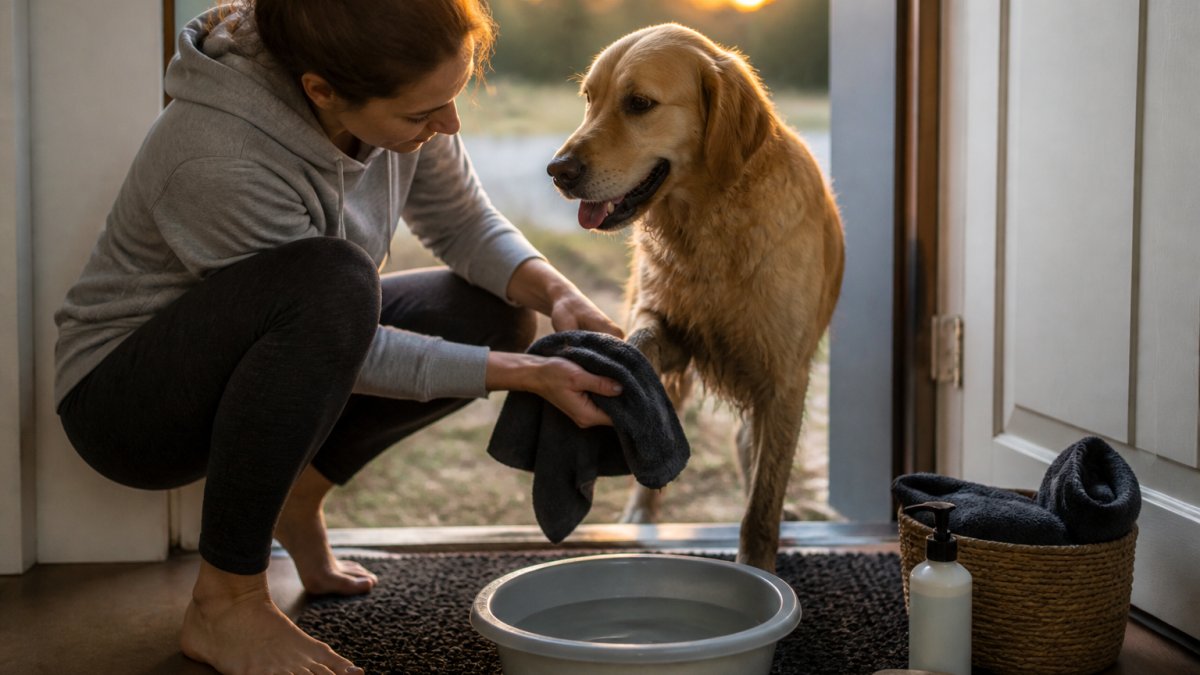
- Set up a cleaning station with a catch zone, wash zone, and dry zone so the dog moves from dirty to clean.
Table of Contents
- How to Clean Muddy Dog Paws Without a Full Bath
- Pet-Safe Wipes for Paws: What to Look For and What to Avoid
- How to Remove Mud From Dog Fur Without a Bath
- How to Dry a Dog After Getting Wet
- A Step-by-Step Cleaning Routine by Level of Mess
- Checking Paws and Coat for Hazards After Outdoor Play
- Setting Up a Cleaning Station to Stop Dirt at the Door
- Frequently Asked Questions
How to Clean Muddy Dog Paws Without a Full Bath
Learning how to keep your pet clean after outdoor play starts with the paws, because that's where most of the mess enters your home. A full bath isn't always practical, especially on a wet weekday evening. A quick paw wash takes minutes and saves your floors.
The trick is order. Rinse first, then wipe, then dry. Skipping straight to a towel just pushes mud deeper into the fur and pads.
Rinsing, Wiping and Drying in the Right Order
- Rinse with warm water to loosen mud and grit. A shallow basin or a jug works fine.
- Wipe from the top of the paw down toward the toes, not upward.
- Dry thoroughly, paying attention to the spaces between the toes.
A common mistake is soaking the whole leg when only the paws are dirty. Keep the water low and targeted. For dogs that hate standing still, a damp cloth does most of the work.
The woman is Australian.
Pet-Safe Wipes for Paws: What to Look For and What to Avoid
Pet-safe wipes are pre-moistened cloths made for cleaning paws and coats without a bath. They should be free of alcohol, bleach, and strong fragrances, since these can dry out paw pads and irritate skin.
Check the label before you buy. Look for:
- Fragrance-free or lightly scented formulas
- No alcohol or bleach
- A size suited to paws, not just full-body use
Watch out: some "pet" wipes are really just baby wipes with a paw print on the pack. For more options, see these eco-friendly pet grooming supplies. If the ingredient list reads like a household cleaner, skip it.
How to Remove Mud From Dog Fur Without a Bath
Removing mud from fur without a bath comes down to letting it dry first. Wet mud smears. Dry mud brushes out.
Here's the sequence:
- Let the mud dry completely, away from carpets.
- Brush out the loose dirt with a firm brush.
- Spot-clean any remaining patches with a damp cloth.
For longer coats, trim small matted sections rather than pulling at them. A dry shampoo made for pets can freshen the coat between baths. Use it sparingly, and brush it through.
How to Dry a Dog After Getting Wet
Drying a wet dog properly prevents skin irritation and keeps damp smells out of your home. Towel-dry first, then let the coat air-dry somewhere warm and draft-free.
Follow this order:
- Towel: press, don't rub, to soak up water.
- Between the toes: dry each gap, since moisture trapped there can lead to irritation.
- Skin folds: for breeds with folds, pat these dry too.
- Air-dry: give the coat time, and keep the dog off furniture until dry.
A common mistake is letting a wet dog straight onto the couch. A durable, washable pet bed makes the cleanup routine easier to finish. A waterproof cover or a dedicated towel on their bed solves that.
A Step-by-Step Cleaning Routine by Level of Mess
Match the routine to the mess. Most days need a wipe; only the worst days need a bath.
| Level of Mess | What Happened | Routine | Time |
|---|---|---|---|
| Light | Dry grass, dust | Brush and wipe paws | 2-3 min |
| Medium | Damp mud, sand | Rinse paws, towel dry | 5 min |
| Heavy | Wet mud, salt water | Full paw wash, dry between toes, spot-clean coat | 10-15 min |
| Extreme | Soaked through | Bath with pet shampoo, full dry | 20+ min |
Checking Paws and Coat for Hazards After Outdoor Play
Checking paws and coat after outdoor play is the step most people skip, and it matters. Grass seeds, burrs, and small cuts hide between the toes and under the coat, and a quick wipe-down will not find them. Run your hands over the dog in a set order so you do not miss the same spot every time: paw pads, between the toes, up each leg, along the belly, under the collar, behind the ears, and finally the tail and back end.
What you are feeling for, and what to do about it:
- Grass seeds and foxtails: these are the highest-risk find. They are small, barbed, and work their way into skin, ears, and nostrils. Check between every toe and around the ear canal. If a seed is sitting loose on the surface, lift it off with tweezers. If it has disappeared into the skin or an ear, do not dig for it, ring your vet, because a seed that migrates can cause an abscess.
- Burrs and sticky plant matter: these usually come out with a brush or by working them free with your fingers. Do not yank matted burrs, as that pulls the skin.
- Ticks: run your fingertips firmly over the coat, feeling for a small bump the size of a pinhead to a match head. Ticks are most often found around the ears, neck, and between the toes. If you find one attached, use fine-tipped tweezers to grip close to the skin and pull steadily upward, then clean the area. If you are unsure, or the tick is in an awkward spot, have your vet remove it.
- Cuts and cracks on paw pads: look for fresh red marks, split pads, or a dog that flinches when a pad is pressed. Clean minor cuts with warm water and keep the dog off rough ground until they close. A deep cut or one that will not stop bleeding needs a vet.
- Road residue, salt, and standing water: these leave a film on the coat and between the toes. A quick rinse with warm water handles it. In winter, road salt and grit can irritate pads, so rinse the paws rather than letting the dog lick them clean.
- Pollen and plant matter on the face and ears: wipe these away with a damp cloth, and check the ears for anything that has gone in rather than onto the fur.
Watch out: a dog that suddenly licks one paw, limps, or shakes its head after outdoor play is often telling you something is lodged rather than just dirty. If you want to keep playtime safer, browse these non-toxic pet toys for dogs. Check that spot first before you reach for the towel.
If you spot a deep cut, swelling, a seed you cannot remove safely, or a tick you cannot get out cleanly, contact your vet rather than improvising.
Setting Up a Cleaning Station to Stop Dirt at the Door
A cleaning station near the door stops dirt before it spreads. For more on keeping mess from traveling inside, see these tips to stop cat litter tracking. Set one up at the entry point your dog uses most, ideally in a mudroom, hallway, or on a covered porch where a wet dog can wait while you work.
The station works best as three zones in a line, so the dog moves from dirty to clean without doubling back:
- The catch zone (outside or just inside the door): a rubber-backed mat with good drainage, or a shallow tray, to take the first load of mud and water. This is where the dog stands while you rinse.
- The wash zone: a shallow basin or a jug of warm water, a stack of towels, and pet wipes for quick clean-ups. Keep the water low and targeted rather than filling a deep tub.
- The dry zone: a second towel and a dedicated bed or waterproof cover where the dog can air-dry without getting on furniture.
Stock the station with:
- A shallow basin or jug for rinsing
- Two or three towels, one to press water out, one to dry between the toes, and a spare for the floor
- Pet wipes for quick clean-ups
- A firm brush for dry mud
- A mat with good drainage
- A waterproof cover for nearby floors
- A small bin or bag for used wipes and picked-out debris
A few practical details make the difference. Keep the towels within arm's reach of the door so there is no scramble when your dog comes in muddy. Store wipes in a sealed container so they do not dry out. If your entry is carpeted, a waterproof runner from the door to the wash zone saves the flooring. For dogs that hate standing still, a lick mat or a treat held at nose height keeps them in place for the minute or two the routine takes.
Watch out: a station that is set up but never restocked is worse than none, because you end up improvising with household towels and cleaners. Check the towel stack and wipe supply weekly, and replace the drainage mat when it starts to hold water.
Keep the station stocked so there is no scramble when your dog comes in muddy.
Frequently Asked Questions
Should I rinse my dog after every walk?
Not always. A full rinse is only needed after beach visits, wet grass or heavy mud, because sand, salt and standing water leave residue that irritates skin. For an ordinary dry walk, a quick paw wipe and a brush of the coat removes most dirt. Rinse with warm water when the coat feels gritty or damp, then dry properly, especially between the toes, so moisture does not sit against the skin.
Can I use pet wipes to clean my dog's paws?
Yes, provided the wipes are made for pets. Look for fragrance-free, alcohol-free options with a short ingredient list, and avoid anything containing bleach, ammonia or strong essential oils. Pet-safe wipes for paws are handy for quick cleanups after outdoor play, but they suit light dirt rather than thick mud. For heavy mud, rinse or towel off first, then finish with a wipe so you are not grinding grit into the paw pads.
How do I remove mud from a dog's coat without giving them a bath?
Let the mud dry completely first. Wet mud smears deeper into the coat, while dry mud brushes out in clumps. Once dry, brush in the direction of the fur with a firm brush, working from the back toward the legs. Follow with a damp towel on any remaining patches, then dry the area. A dry shampoo made for pets can lift residue on thick or double coats, but check the label and keep it away from the eyes and nose.
How can I stop my pet from bringing dirt into the house?
Set up a cleaning station at the entry point: a waterproof mat, a towel, a shallow basin and a stash of pet wipes within reach. Wipe paws before your pet crosses the threshold, every time, so it becomes routine. Keep the hair between the toes trimmed, and use a removable cover on car seats and furniture your pet uses after outdoor play. A quick brush outdoors before going inside also cuts down on loose dirt and debris.
Keeping a dog clean after outdoor play is really about a fast routine you'll actually stick to. At Oddities & Ends, we make it easy to stock up on the practical bits: pet wipes, towels, mats, and durable beds. We offer curated pet supplies with free delivery across Australia, so your cleaning station is ready before the next muddy walk. Shop now and keep the mess at the door.
